Infant vaccination declines
19 April 2024
In the run up to World Immunisation Week (24 to 30 April), the City’s Health Department calls on parents and caregivers to ensure their children’s vaccinations are up to date. The department recorded a 16% decline year-on-year in follow-up immunisations of children younger than 12 months. During the first year, children build up immunity against a number of infectious diseases through active vaccination against these diseases. When not fully vaccinated, they are at risk of severe complications should they become infected.
Children are considered fully vaccinated by the age of one year, provided all the vaccines scheduled from birth to 12 months have been administered.
'The scheduled vaccinations will provide the child with adequate protection against a number of infectious diseases. Should they come into contact with the specific virus that they were immunised against, they might have no symptoms or very mild symptoms and their risk of complications is very low.
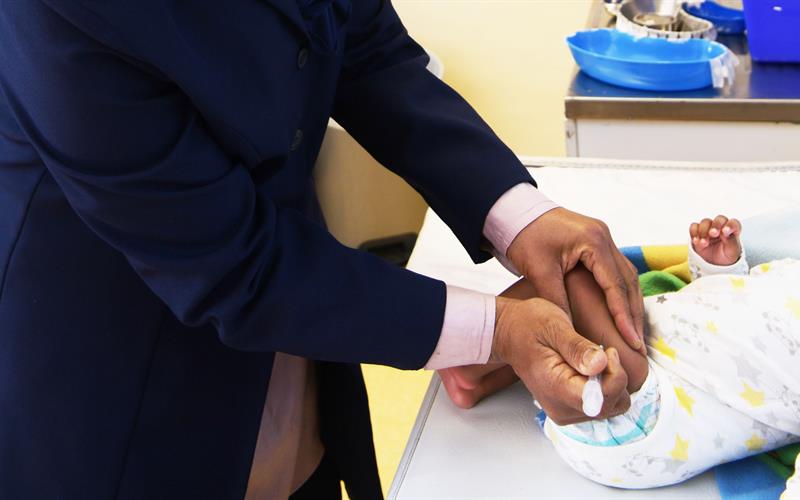
'Making sure your baby is immunised is an investment in their health. A number of diseases can be prevented and the vaccinations are free at City clinics,' said the City's Mayoral Committee Member for Community Services and Health, Councillor Patricia van der Ross.
Among the factors that impact vaccination rates are:
- Vaccine hesitancy
- Communities making use of private service providers
- Refusal of vaccination for religious reasons
- Anti-vaccine myths and conspiracies
| City Health immunisation statistics | 2022 | 2023 | % change |
| Immunised fully under 1 year | 34 382 | 29 004 | -16% |
What childhood diseases do vaccines prevent?
1. The BCG or Bacillus Calmette Guerin vaccine protects against severe TB. It is administered at birth or the six-week visit.
2. The OPV or Oral Polio Vaccine protects against polio, which attacks nerves, causing weakness or paralysis of the leg and/or arm, and in severe cases, involve the respiratory muscles. Given at birth, six, 10 and 14 weeks.
3. The RV or Rotavirus vaccine protects against diarrhoea caused by the rotavirus. Given at six and 14 weeks.
4. The DTaP-IPV-HiB-HBV vaccines protect against Diphtheria, Tetanus, Pertussis, Polio, Haemophilus Influenza Type B and Hepatitis B. Given at six,10 and 14 weeks.
- Diphtheria is a disease which makes it difficult to breathe.
- Tetanus is an infection that occurs when a toxin produced by a tetanus germ from the soil enters a cut or wound. The chances of dying from this condition are very high
- Pertussis (whooping cough) is a respiratory infection accompanied by strenuous coughing bouts that make it hard for a child to eat, drink or even breathe.
- HiB or Haemophilus Influenza Type B is an illness caused by the HiB bacteria. Death from HiB disease is common in children under the age of one.
- HBV or Hepatitis B is an infection of the liver that can result in liver damage, liver cancer and death later in life.
5. The PCV or Pneumococcal Conjugated Vaccine protects against meningitis, otitis media (ear infection), pneumonia, and bacteraemia (bacterial infection in the blood). Given at six and 14 weeks and at nine months.
6. The Measles Vaccine protects against measles, an infection that can lead to diarrhoea and dehydration, deafness, eye complications, pneumonia, brain damage and even death. Given at six months and one year.
'Immunisation has enabled us to minimise the risk of serious illness and fatalities. I want to encourage parents and caregivers to ensure immunisation schedules are up to date. Don't hesitate as it could have serious and even fatal consequences. Discuss any concerns you may have with our trained nursing staff,' added Councillor Van der Ross.
End
Published by:
City of Cape Town, Media Office